Powerpoint on Mesopotamian Art Powerpoint on Ancient Greek Art
History of Mental Illness
ByHood College
This module is divided into three parts. The first is a brief introduction to various criteria we use to define or distinguish between normality and abnormality. The second, largest office is a history of mental illness from the Stone Age to the 20th century, with a special emphasis on the recurrence of three causal explanations for mental illness; supernatural, somatogenic, and psychogenic factors. This function briefly touches upon trephination, the Greek theory of hysteria within the context of the four bodily humors, witch hunts, asylums, moral treatment, mesmerism, catharsis, the mental hygiene movement, deinstitutionalization, community mental wellness services, and managed intendance. The tertiary part concludes with a brief description of the result of diagnosis.
Learning Objectives
- Place what the criteria used to distinguish normality from aberration are.
- Empathize the difference amongst the iii main etiological theories of mental illness.
- Describe specific behavior or events in history that exemplify each of these etiological theories (e.g., hysteria, humorism, witch hunts, asylums, moral treatments).
- Explain the differences in treatment facilities for the mentally ill (eastward.yard., mental hospitals, asylums, community mental health centers).
- Depict the features of the "moral treatment" approach used by Chiarughi, Pinel, and Tuke.
- Describe the reform efforts of Dix and Beers and the outcomes of their work.
- Describe Kräpelin's classification of mental illness and the electric current DSM system.
History of Mental Illness
References to mental illness can be found throughout history. The evolution of mental illness, withal, has non been linear or progressive but rather cyclical. Whether a beliefs is considered normal or abnormal depends on the context surrounding the behavior and thus changes every bit a function of a particular time and civilization. In the past, uncommon beliefs or behavior that deviated from the sociocultural norms and expectations of a specific culture and period has been used equally a way to silence or command certain individuals or groups. As a outcome, a less cultural relativist view of aberrant beliefs has focused instead on whether behavior poses a threat to oneself or others or causes and then much pain and suffering that it interferes with ane's work responsibilities or with one's relationships with family and friends.
Throughout history there have been three general theories of the etiology of mental disease: supernatural, somatogenic, and psychogenic. Supernatural theories aspect mental illness to possession by evil or demonic spirits, displeasure of gods, eclipses, planetary gravitation, curses, and sin. Somatogenic theories identify disturbances in physical performance resulting from either illness, genetic inheritance, or brain impairment or imbalance. Psychogenic theories focus on traumatic or stressful experiences, maladaptive learned associations and cognitions, or distorted perceptions. Etiological theories of mental disease determine the care and treatment mentally ill individuals receive. As we will come across below, an individual believed to be possessed by the devil will be viewed and treated differently from an individual believed to be suffering from an excess of yellow bile. Their treatments volition also differ, from exorcism to blood-letting. The theories, however, remain the same. They coexist as well equally recycle over fourth dimension.
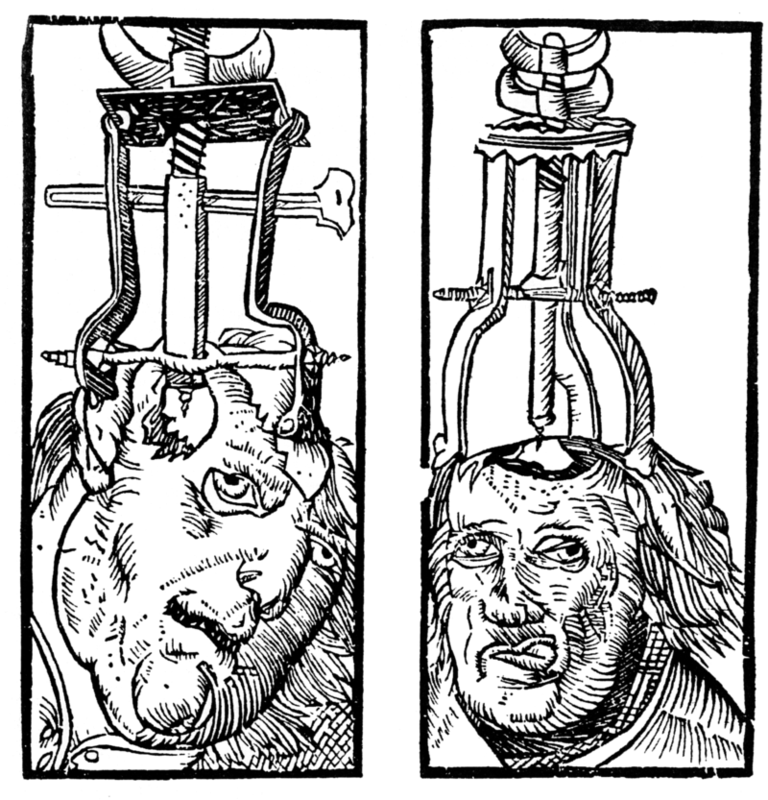
Trephination is an case of the earliest supernatural caption for mental illness. Examination of prehistoric skulls and cave art from as early as 6500 BC has identified surgical drilling of holes in skulls to care for head injuries and epilepsy as well as to let evil spirits trapped within the skull to be released (Restak, 2000). Effectually 2700 BC, Chinese medicine'southward concept of complementary positive and negative bodily forces ("yin and yang") attributed mental (and physical) affliction to an imbalance between these forces. Every bit such, a harmonious life that allowed for the proper rest of yin and yang and movement of vital air was essential (Tseng, 1973).
Mesopotamian and Egyptian papyri from 1900 BC describe women suffering from mental illness resulting from a wandering uterus (afterward named hysteria by the Greeks): The uterus could get dislodged and attached to parts of the torso similar the liver or chest crenel, preventing their proper functioning or producing varied and sometimes painful symptoms. As a result, the Egyptians, and later the Greeks, as well employed a somatogenic handling of potent smelling substances to guide the uterus back to its proper location (pleasant odors to lure and unpleasant ones to dispel).
Throughout classical artifact we see a return to supernatural theories of demonic possession or godly displeasure to account for abnormal behavior that was beyond the person'south command. Temple attendance with religious healing ceremonies and incantations to the gods were employed to assist in the healing process. Hebrews saw madness equally punishment from God, so treatment consisted of confessing sins and repenting. Physicians were also believed to be able to comfort and cure madness, still.
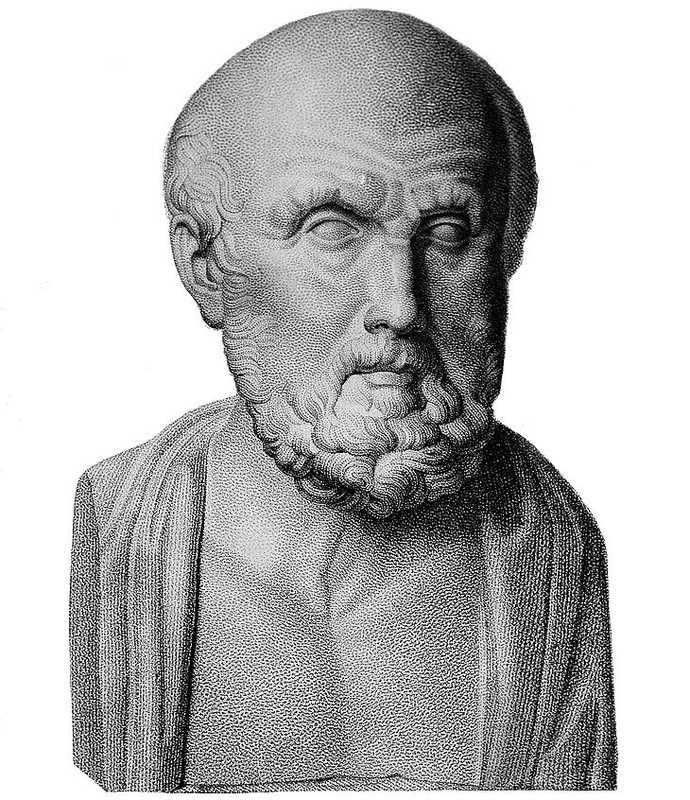
Greek physicians rejected supernatural explanations of mental disorders. It was around 400 BC that Hippocrates (460–370 BC) attempted to dissever superstition and organized religion from medicine by systematizing the belief that a deficiency in or especially an excess of one of the four essential bodily fluids (i.e., humors)—blood, xanthous bile, black bile, and phlegm—was responsible for physical and mental illness. For case, someone who was too temperamental suffered from too much blood and thus blood-letting would exist the necessary treatment. Hippocrates classified mental illness into one of four categories—epilepsy, mania, melancholia, and brain fever—and like other prominent physicians and philosophers of his fourth dimension, he did not believe mental illness was shameful or that mentally sick individuals should be held accountable for their behavior. Mentally ill individuals were cared for at habitation by family unit members and the country shared no responsibility for their intendance. Humorism remained a recurrent somatogenic theory up until the 19th century.
While Greek md Galen (AD 130–201) rejected the notion of a uterus having an animistic soul, he agreed with the notion that an imbalance of the four bodily fluids could cause mental illness. He also opened the door for psychogenic explanations for mental illness, still, by assuasive for the experience of psychological stress as a potential crusade of abnormality. Galen's psychogenic theories were ignored for centuries, yet, equally physicians attributed mental affliction to concrete causes throughout most of the millennium.
By the tardily Middle Ages, economical and political turmoil threatened the power of the Roman Catholic church. Between the 11th and 15th centuries, supernatural theories of mental disorders again dominated Europe, fueled by natural disasters like plagues and famines that lay people interpreted as brought about by the devil. Superstition, astrology, and alchemy took concord, and mutual treatments included prayer rites, relic touching, confessions, and atonement. Beginning in the 13th century the mentally ill, specially women, began to be persecuted as witches who were possessed. At the peak of the witch hunts during the 15th through 17th centuries, with the Protestant Reformation having plunged Europe into religious strife, two Dominican monks wrote the Malleus Maleficarum (1486) as the ultimate manual to guide witch hunts. Johann Weyer and Reginald Scot tried to convince people in the mid- to late-16th century that accused witches were actually women with mental illnesses and that mental illness was not due to demonic possession just to faulty metabolism and disease, just the Church'due south Inquisition banned both of their writings. Witch-hunting did not decline until the 17th and 18th centuries, later more than than 100,000 presumed witches had been burned at the stake (Schoeneman, 1977; Zilboorg & Henry, 1941).
Modernistic treatments of mental illness are most associated with the institution of hospitals and asylums start in the 16th century. Such institutions' mission was to house and confine the mentally sick, the poor, the homeless, the unemployed, and the criminal. War and economic depression produced vast numbers of undesirables and these were separated from club and sent to these institutions. Two of the well-nigh well-known institutions, St. Mary of Bethlehem in London, known as Clamor, and the Hôpital Général of Paris—which included La Salpêtrière, La Pitié, and La Bicêtre—began housing mentally ill patients in the mid-16th and 17th centuries. As confinement laws focused on protecting the public from the mentally ill, governments became responsible for housing and feeding undesirables in exchange for their personal freedom. Most inmates were institutionalized against their will, lived in filth and chained to walls, and were unremarkably exhibited to the public for a fee. Mental illness was however viewed somatogenically, so treatments were similar to those for physical illnesses: purges, bleedings, and emetics.
While inhumane by today's standards, the view of insanity at the time likened the mentally ill to animals (i.eastward., lust) who did not have the capacity to reason, could not control themselves, were capable of violence without provocation, did not take the same concrete sensitivity to hurting or temperature, and could live in miserable conditions without complaint. Every bit such, instilling fearfulness was believed to exist the best fashion to restore a matted mind to reason.
By the 18th century, protests rose over the conditions under which the mentally ill lived, and the 18th and 19th centuries saw the growth of a more humanitarian view of mental illness. In 1785 Italian physician Vincenzo Chiarughi (1759–1820) removed the chains of patients at his St. Boniface hospital in Florence, Italy, and encouraged adept hygiene and recreational and occupational preparation. More well known, French doctor Philippe Pinel (1745–1826) and one-time patient Jean-Baptise Pussin created a "traitement moral" at La Bicêtre and the Salpêtrière in 1793 and 1795 that also included unshackling patients, moving them to well-aired, well-lit rooms, and encouraging purposeful activity and freedom to move about the grounds (Micale, 1985).
In England, humanitarian reforms rose from religious concerns. William Tuke (1732–1822) urged the Yorkshire Guild of (Quaker) Friends to establish the York Retreat in 1796, where patients were guests, not prisoners, and where the standard of care depended on dignity and courtesy as well as the therapeutic and moral value of physical work (Bell, 1980).
While America had asylums for the mentally ill—such as the Pennsylvania Infirmary in Philadelphia and the Williamsburg Infirmary, established in 1756 and 1773—the somatogenic theory of mental illness of the time—promoted especially by the father of America psychiatry, Benjamin Rush (1745–1813)—had led to treatments such every bit blood-letting, gyrators, and tranquilizer chairs. When Tuke's York Retreat became the model for one-half of the new private asylums established in the United States, however, psychogenic treatments such as compassionate care and physical labor became the hallmarks of the new American asylums, such as the Friends Asylum in Frankford, Pennsylvania, and the Bloomingdale Asylum in New York City, established in 1817 and 1821 (Grob, 1994).
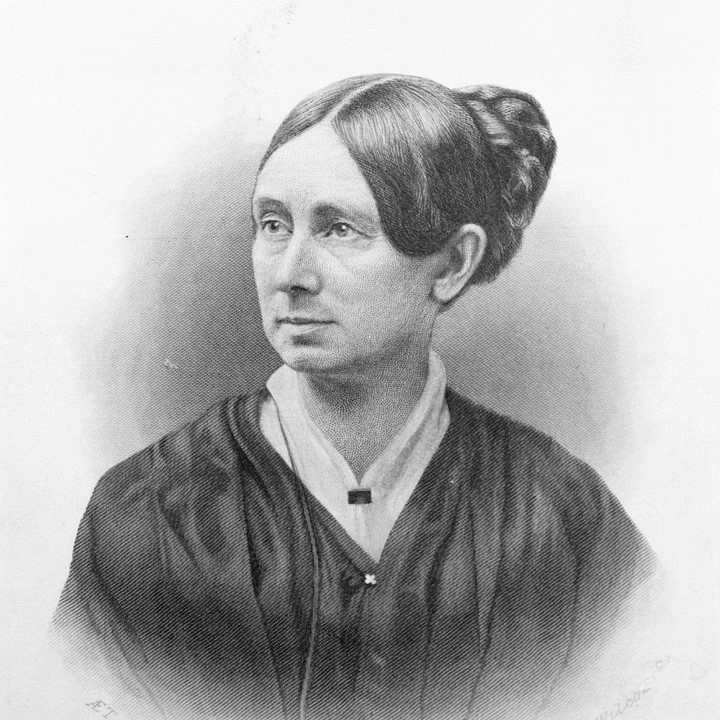
Moral treatment had to exist abandoned in America in the 2nd half of the 19th century, however, when these asylums became overcrowded and custodial in nature and could no longer provide the infinite nor attending necessary. When retired school instructor Dorothea Dix discovered the negligence that resulted from such conditions, she advocated for the establishment of state hospitals. Betwixt 1840 and1880, she helped establish over xxx mental institutions in the United States and Canada (Viney & Zorich, 1982). By the tardily 19th century, moral treatment had given way to the mental hygiene movement, founded by former patient Clifford Beers with the publication of his 1908 memoir A Mind That Found Itself. Riding on Pasteur's quantum germ theory of the 1860s and 1870s and especially on the early on 20th century discoveries of vaccines for cholera, syphilis, and typhus, the mental hygiene movement reverted to a somatogenic theory of mental illness.
European psychiatry in the tardily 18th century and throughout the 19th century, yet, struggled between somatogenic and psychogenic explanations of mental illness, especially hysteria, which caused concrete symptoms such as blindness or paralysis with no apparent physiological explanation. Franz Anton Mesmer (1734–1815), influenced past gimmicky discoveries in electricity, attributed hysterical symptoms to imbalances in a universal magnetic fluid institute in individuals, rather than to a wandering uterus (Forrest, 1999). James Braid (1795–1860) shifted this belief in mesmerism to one in hypnosis, thereby proposing a psychogenic handling for the removal of symptoms. At the time, famed Salpetriere Infirmary neurologist Jean-Martin Charcot (1825–1893), and Ambroise Auguste Liébault (1823–1904) and Hyppolyte Bernheim (1840–1919) of the Nancy School in French republic, were engaged in a bitter etiological battle over hysteria, with Charcot maintaining that the hypnotic suggestibility underlying hysteria was a neurological condition while Liébault and Bernheim believed it to be a general trait that varied in the population. Josef Breuer (1842–1925) and Sigmund Freud (1856–1939) would resolve this dispute in favor of a psychogenic caption for mental illness by treating hysteria through hypnosis, which eventually led to the cathartic method that became the precursor for psychoanalysis during the starting time half of the 20th century.
Psychoanalysis was the dominant psychogenic handling for mental illness during the first half of the 20th century, providing the launching pad for the more than 400 unlike schools of psychotherapy found today (Magnavita, 2006). Most of these schools cluster effectually broader behavioral, cognitive, cognitive-behavioral, psychodynamic, and customer-centered approaches to psychotherapy applied in individual, marital, family unit, or group formats. Negligible differences take been found amongst all these approaches, however; their efficacy in treating mental illness is due to factors shared among all of the approaches (non item elements specific to each approach): the therapist-patient alliance, the therapist's allegiance to the therapy, therapist competence, and placebo effects (Luborsky et al., 2002; Messer & Wampold, 2002).
In contrast, the leading somatogenic handling for mental illness can be found in the establishment of the first psychotropic medications in the mid-20th century. Restraints, electro-convulsive shock therapy, and lobotomies continued to be employed in American state institutions until the 1970s, but they quickly made mode for a burgeoning pharmaceutical manufacture that has viewed and treated mental illness as a chemical imbalance in the brain.
Both etiological theories coexist today in what the psychological discipline holds as the biopsychosocial model of explaining homo beliefs. While individuals may be born with a genetic predisposition for a sure psychological disorder, certain psychological stressors need to exist present for them to develop the disorder. Sociocultural factors such every bit sociopolitical or economical unrest, poor living conditions, or problematic interpersonal relationships are too viewed every bit contributing factors. However much we want to believe that we are above the treatments described above, or that the nowadays is always the near enlightened time, allow us non forget that our thinking today continues to reflect the aforementioned underlying somatogenic and psychogenic theories of mental illness discussed throughout this cursory 9,000-year history.
Diagnosis of Mental Disease
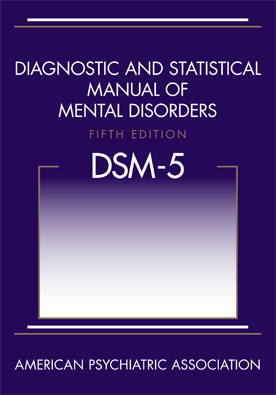
Progress in the treatment of mental illness necessarily implies improvements in the diagnosis of mental affliction. A standardized diagnostic classification organization with agreed-upon definitions of psychological disorders creates a shared language among mental-wellness providers and aids in clinical enquiry. While diagnoses were recognized as far back as the Greeks, it was not until 1883 that German language psychiatrist Emil Kräpelin (1856–1926) published a comprehensive system of psychological disorders that centered around a pattern of symptoms (i.e., syndrome) suggestive of an underlying physiological cause. Other clinicians also suggested popular nomenclature systems but the need for a single, shared arrangement paved the way for the American Psychiatric Association's 1952 publication of the first Diagnostic and Statistical Manual (DSM).
The DSM has undergone various revisions (in 1968, 1980, 1987, 1994, 2000, 2013), and information technology is the 1980 DSM-3 version that began a multiaxial classification arrangement that took into account the entire individual rather than only the specific problem behavior. Axes I and Ii contain the clinical diagnoses, including intellectual disability and personality disorders. Axes III and 4 list any relevant medical conditions or psychosocial or ecology stressors, respectively. Axis V provides a global cess of the individual's level of functioning. The most recent version -- the DSM-5-- has combined the first three axes and removed the last two. These revisions reflect an attempt to help clinicians streamline diagnosis and work meliorate with other diagnostic systems such every bit wellness diagnoses outlined past the Earth Health Organization.
While the DSM has provided a necessary shared language for clinicians, aided in clinical enquiry, and allowed clinicians to be reimbursed by insurance companies for their services, it is not without criticism. The DSM is based on clinical and research findings from Western culture, primarily the United States. Information technology is also a medicalized categorical nomenclature system that assumes disordered behavior does non differ in degree but in kind, as opposed to a dimensional nomenclature system that would plot disordered behavior along a continuum. Finally, the number of diagnosable disorders has tripled since it was first published in 1952, so that most half of Americans will have a diagnosable disorder in their lifetime, contributing to the continued business organization of labeling and stigmatizing mentally sick individuals. These concerns appear to be relevant even in the DSM-5 version that came out in May of 2013.
Outside Resources
- Video: An introduction to and overview of psychology, from its origins in the nineteenth century to current study of the encephalon\'south biochemistry.
- http://world wide web.learner.org/series/discoveringpsychology/01/e01expand.html
- Video: The BBC provides an overview of aboriginal Greek approaches to health and medicine.
- https://world wide web.tes.com/teaching-resource/ancient-greek-approaches-to-health-and-medicine-6176019
- Spider web: Images from the History of Medicine. Search \\\"mental illness\\\"
- http://ihm.nlm.nih.gov/luna/servlet/view/all
- Spider web: Science Museum Brought to Life
- http://www.sciencemuseum.org.uk/broughttolife/themes/menalhealthandillness.aspx
- Web: The Social Psychology Network provides a number of links and resources.
- https://www.socialpsychology.org/history.htm
- Spider web: The Wellcome Library. Search \\\"mental disease\\\".
- http://wellcomelibrary.org/
- Spider web: UCL Department of Scientific discipline and Technology Studies
- https://www.ucl.ac.great britain/sts/
- Web: US National Library of Medicine
- http://vsearch.nlm.nih.gov/vivisimo/cgi-bin/query-meta?query=mental+illness&v:project=nlm-main-website
Word Questions
- What does it mean to say that someone is mentally ill? What criteria are usually considered to determine whether someone is mentally ill?
- Depict the difference between supernatural, somatogenic, and psychogenic theories of mental illness and how subscribing to a detail etiological theory determines the type of handling used.
- How did the Greeks describe hysteria and what treatment did they prescribe?
- Describe humorism and how it explained mental illness.
- Describe how the witch hunts came virtually and their relationship to mental illness.
- Describe the development of handling facilities for the mentally insane, from asylums to community mental health centers.
- Describe the humane treatment of the mentally ill brought about by Chiarughi, Pinel, and Tuke in the belatedly 18th and early 19th centuries and how it differed from the care provided in the centuries preceding it.
- Describe William Tuke's treatment of the mentally sick at the York Retreat within the context of the Quaker Guild of Friends. What influence did Tuke's handling have in other parts of the world?
- What are the 20th-century treatments resulting from the psychogenic and somatogenic theories of mental illness?
- Depict why a classification system is important and how the leading nomenclature organization used in the United States works. Describe some concerns with regard to this system.
Vocabulary
- Animism
- The conventionalities that anybody and everything had a "soul" and that mental illness was due to animistic causes, for example, evil spirits controlling an individual and his/her beliefs.
- Asylum
- A place of refuge or safety established to confine and care for the mentally ill; forerunners of the mental hospital or psychiatric facility.
- A model in which the interaction of biological, psychological, and sociocultural factors is seen as influencing the development of the private.
- Cathartic method
- A therapeutic procedure introduced by Breuer and adult further by Freud in the late 19th century whereby a patient gains insight and emotional relief from recalling and reliving traumatic events.
- Cultural relativism
- The idea that cultural norms and values of a society can only be understood on their own terms or in their own context.
- Etiology
- The causal description of all of the factors that contribute to the development of a disorder or illness.
- Humorism (or humoralism)
- A belief held past ancient Greek and Roman physicians (and until the 19th century) that an excess or deficiency in whatsoever of the iv bodily fluids, or humors—claret, blackness bile, yellowish bile, and phlegm—directly affected their wellness and temperament.
- Hysteria
- Term used past the ancient Greeks and Egyptians to describe a disorder believed to be caused by a woman's uterus wandering throughout the body and interfering with other organs (today referred to as conversion disorder, in which psychological issues are expressed in physical form).
- Maladaptive
- Term referring to behaviors that cause people who have them physical or emotional impairment, prevent them from functioning in daily life, and/or indicate that they have lost touch with reality and/or cannot control their thoughts and behavior (also called dysfunctional).
- Mesmerism
- Derived from Franz Anton Mesmer in the late 18th century, an early version of hypnotism in which Mesmer claimed that hysterical symptoms could be treated through animal magnetism emanating from Mesmer'south torso and permeating the universe (and subsequently through magnets); later explained in terms of loftier suggestibility in individuals.
- Psychogenesis
- Developing from psychological origins.
- Somatogenesis
- Developing from concrete/actual origins.
- Supernatural
- Developing from origins beyond the visible observable universe.
- Syndrome
- Involving a item group of signs and symptoms.
- "Traitement moral" (moral treatment)
- A therapeutic regimen of improved diet, living conditions, and rewards for productive behavior that has been attributed to Philippe Pinel during the French Revolution, when he released mentally ill patients from their restraints and treated them with compassion and dignity rather than with contempt and denigration.
- Trephination
- The drilling of a hole in the skull, presumably every bit a style of treating psychological disorders.
References
- Bell, L. V. (1980). Treating the mentally sick: From colonial times to the present. New York: Praeger.
- Forrest, D. (1999). Hypnotism: A history. New York: Penguin.
- Grob, G. North. (1994). The mad among us: A history of the care of America's mentally ill. New York: Costless Press.
- Luborsky, Fifty., Rosenthal, R., Diguer, L., Andrusyna, T. P., Berman, J. South., Levitt, J. T., . . . Krause, E. D. (2002). The dodo bird verdict is alive and well—mostly. Clinical Psychology: Science and Practice, 9, ii–12.
- Messer, Due south. B., & Wampold, B. E. (2002). Let'southward confront facts: Common factors are more potent than specific therapy ingredients. Clinical Psychology: Science and Practice, 9(ane), 21–25.
- Micale, M. S. (1985). The Salpêtrière in the age of Charcot: An institutional perspective on medical history in the late nineteenth century. Journal of Contemporary History, 20, 703–731.
- Restak, R. (2000). Mysteries of the mind. Washington, DC: National Geographic Guild.
- Schoeneman, T. J. (1977). The office of mental disease in the European witch hunts of the sixteenth and seventeenth centuries: An cess. Journal of the History of the Behavioral Sciences, 13(4), 337–351.
- Tseng, Westward. (1973). The evolution of psychiatric concepts in traditional Chinese medicine. Archives of General Psychiatry, 29, 569–575.
- Viney, W., & Zorich, South. (1982). Contributions to the history of psychology: XXIX. Dorothea Dix and the history of psychology. Psychological Reports, 50, 211–218.
- Zilboorg, G., & Henry, Yard. Due west. (1941). A history of medical psychology. New York: W. Westward. Norton.
Authors
Creative Eatables License


 History of Mental Illness by Ingrid G. Farreras is licensed nether a Artistic Commons Attribution-NonCommercial-ShareAlike 4.0 International License. Permissions across the scope of this license may exist available in our Licensing Understanding.
 How to cite this Noba module using APA Mode
Farreras, I. Yard. (2022). History of mental disease. In R. Biswas-Diener & E. Diener (Eds), Noba textbook series: Psychology. Champaign, IL: DEF publishers. Retrieved from http://noba.to/65w3s7exdavidpriarriank02.blogspot.com
Source: https://nobaproject.com/modules/history-of-mental-illness
0 Response to "Powerpoint on Mesopotamian Art Powerpoint on Ancient Greek Art"
Postar um comentário